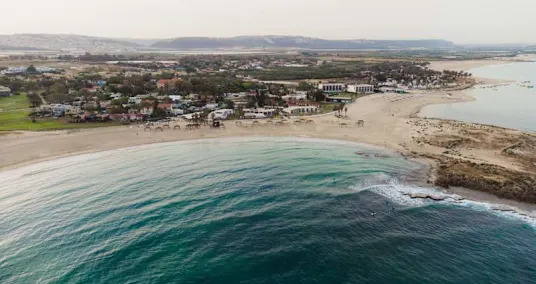
The discovery was made in an ancient shipwreck in the Dor Lagoon near the Carmel Coast, where archaeologists recovered nine pieces of unprocessed iron known as “blooms.”
Researchers from the University of Haifa said Wednesday that an underwater excavation off Israel’s northern Mediterranean coast uncovered what they described as the earliest known cargo of raw iron transported by ship, dating back around 2,600 years, Xinhua reported.
The discovery was made in an ancient shipwreck in the Dor Lagoon near the Carmel Coast, where archaeologists recovered nine pieces of unprocessed iron known as “blooms.” According to the university, the find provides direct evidence of how iron was transported in its earliest commercial stages.
The material was preserved in its original form, having solidified directly in a smelting furnace without undergoing forging or further refinement. Researchers said this distinguishes the cargo from later iron artifacts that typically show signs of shaping or tool-making.
Unlike copper and bronze, which could be melted into liquid form in ancient production processes, iron was heated with charcoal to produce a solid, porous mass. That mass was generally hammered to remove impurities and create denser material suitable for tools and implements.
The recovered blooms showed no indication of that secondary processing stage, suggesting they were transported immediately after production.

Earliest iron shipment discovered in ancient Mediterranean wreck
To determine the age and condition of the cargo, researchers conducted microscopic and chemical analyses.
Radiocarbon dating was also carried out on charred wood embedded in one of the pieces, helping confirm the timeline of the shipment. The findings were published in the journal Heritage Science.
Researchers said the cargo indicates that iron was being moved in raw form from production sites to other locations for further processing, pointing to a level of specialization in ancient manufacturing and trade networks in the Mediterranean.
The University of Haifa said the discovery provides new insight into early iron production and distribution practices in the region.
LATEST POSTS
- 1
 Human evolution’s biggest mystery has started to unravel. How 2025 tipped the scales
 - 2'Stranger Things' star debunks claims of 'unseen footage' from Season 5, Volume 2 as backlash intensifies ahead of the series finale
- 3Radiate brilliantly: The 5 Precious stone Rings to Purchase in 2024
- 4Make your choice for the music application with the most amicable connection point!
- 5Two reportedly killed as Israel attacks Hezbollah targets in Lebanon


- Hitler's madcap mega-railway would have linked Berlin with India
- The Main 20 Gaming Control center Ever
- The Most Vital Crossroads in Olympic History
- Watch SpaceX launch 119 payloads to orbit from California early on March 30
- Pick Your #1 breakfast food
- Earth’s magnetic field protects life on Earth from radiation, but it can move, and the magnetic poles can even flip
- The Way to Recuperation: Defeating Dependence
- 'Unreal' solar eclipse: Artemis 2 crew just saw one of the rarest sights in spaceflight history
- Israel faces widespread condemnation as NGO ban comes into effect